I mentioned this in the Fender area, but it's a topic of general interest.
It looks like I had a PT die on me for the first time. The amp doesn't run, and the resistance across the primary is infinite. I figure there is a break in the circuit somewhere in the transformer.
I assume this is impossible or difficult to fix without replacing the PT, but I have to ask: is there anything particular kind of abuse that's likely to cause the primary winding on a PT to open?
What Makes PT Windings Open?
Moderators: pompeiisneaks, Colossal
-
The New Steve H

- Posts: 1047
- Joined: Mon May 30, 2011 11:24 pm
What Makes PT Windings Open?
Relax. It's SUPPOSED to smoke a little.

Re: What Makes PT Windings Open?
It sounds like a catastrophic failure where the insulation melted and the winding is fused. The winding wire is, essentially, magnet wire, copper with varnish on it. At very high temperature, the varnish melts. I'm thinking this happens when the amp is pushed so hard the combination of all the secondaries VA demand more than the primary VA can supply. The primary heats up and that's it. The other possibility might be a surge from the wall socket to the amp.
Did someone wrap an old fuse in foil or put a 10A fuse in the hole? That would do it.
It is possible to rewind a PT, but I'm going to guess it will be cheaper in the US to just buy another one.
This is your chance to take apart a transformer. Once you do that, you'll understand what makes them tick. It will take you a few hours or maybe less if you get the hang of it. After you take the screws out, and you extract the key lam they put in last (this is the tricky part), you can start to split off the lams one at a time. They are varnished together. Use a razor knife to cut between lams and they will start to come apart. You might want to take care to restack them in order. Someone might want them to roll his own. Once you get all the tongues out of the core, take off the paper and you'll find the fused winding.
(Edited because someone ripped me for some minor inaccuracies, which were deleted.)
Did someone wrap an old fuse in foil or put a 10A fuse in the hole? That would do it.
It is possible to rewind a PT, but I'm going to guess it will be cheaper in the US to just buy another one.
This is your chance to take apart a transformer. Once you do that, you'll understand what makes them tick. It will take you a few hours or maybe less if you get the hang of it. After you take the screws out, and you extract the key lam they put in last (this is the tricky part), you can start to split off the lams one at a time. They are varnished together. Use a razor knife to cut between lams and they will start to come apart. You might want to take care to restack them in order. Someone might want them to roll his own. Once you get all the tongues out of the core, take off the paper and you'll find the fused winding.
(Edited because someone ripped me for some minor inaccuracies, which were deleted.)
Last edited by Phil_S on Tue Jan 19, 2016 12:02 am, edited 1 time in total.
-
The New Steve H
- Posts: 1047
- Joined: Mon May 30, 2011 11:24 pm
Re: What Makes PT Windings Open?
The thing is, I don't want to put a new PT in there and fry it, too. I don't know what happened to it.
I was playing the amp with the gain maxed out and the volume low, with a new PPIMV installed in addition to the original volume knob. It worked fine for hours, but it refused to turn on the next day.
I was playing the amp with the gain maxed out and the volume low, with a new PPIMV installed in addition to the original volume knob. It worked fine for hours, but it refused to turn on the next day.
Relax. It's SUPPOSED to smoke a little.
Re: What Makes PT Windings Open?
I replied on the other post. Primaries don't typically go, because they're wound for lowish AC and higher current. Fat wires. After the transformer is wound, though, connections are made internally and come out where you can see them. Using the smallest wire allowable. Soldered by Chinese workers on the clock.
It's a given that all replacement parts are better engineered than originals (for real), but if you're curious, open it up and see if you can fix it. Not too deep, just where the external leads connect. Modern Fenders: Fuck Me!
It's a given that all replacement parts are better engineered than originals (for real), but if you're curious, open it up and see if you can fix it. Not too deep, just where the external leads connect. Modern Fenders: Fuck Me!
Re: What Makes PT Windings Open?
There may be a thermal fuse built into the windings, which as with any part could have failed randomly, or as suggested, it increases the number of internal connections that there are to fail.
I think that some Hammond PT drawings show such thermal fuses.
I think that some Hammond PT drawings show such thermal fuses.
https://www.justgiving.com/page/5-in-5-for-charlie This is my step son and his family. He is running 5 marathons in 5 days to support the research into STXBP1, the genetic condition my grandson Charlie has. Please consider supporting him!

Re: What Makes PT Windings Open?
Oh PLEASE !!! 
Meaning a "very low value resistor" , think zero ohms or at most a fraction of one ohm.
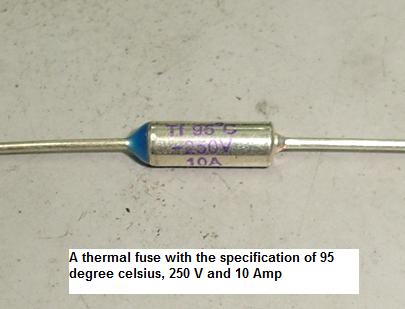
Modern transformers carry (by Law) a Thermal Fuse inside,wrapped in the winding.
When it heats up beyond a rated temperature (it's basically made out of a metallic alloy which melts at relatively low temperature, think boiling water point) it opens.
Np need to melt or fuse any wire, not even the plastic bobbin.
Temperature is printed on the fuse case:
[img:405:309]http://www.electronicrepairguide.com/im ... alfuse.jpg[/img]
"infinite" is exactly the same as "open" . Period.Phil_S wrote:If you are seeing infinite rather than open,
If insulation melts, it becomes a *short* .it sounds like a catastrophic failure where the insulation melted and the winding is fused so it looks like a very high value resistor.
Meaning a "very low value resistor" , think zero ohms or at most a fraction of one ohm.
Modern transformers carry (by Law) a Thermal Fuse inside,wrapped in the winding.
When it heats up beyond a rated temperature (it's basically made out of a metallic alloy which melts at relatively low temperature, think boiling water point) it opens.
Np need to melt or fuse any wire, not even the plastic bobbin.
Temperature is printed on the fuse case:
[img:405:309]http://www.electronicrepairguide.com/im ... alfuse.jpg[/img]
Get a new transformer from Fender.Once you get all the tongues out of the core, take off the paper and you'll find the fused winding.
Design/Make/Service Musical stuff in Buenos Aires, Argentina, since 1969

Re: What Makes PT Windings Open?
Use a light bulb limiter a nd you'll be fine if something is drawing excessive current you will be able to see itThe New Steve H wrote:The thing is, I don't want to put a new PT in there and fry it, too. I don't know what happened to it.
I was playing the amp with the gain maxed out and the volume low, with a new PPIMV installed in addition to the original volume knob. It worked fine for hours, but it refused to turn on the next day.
-
The New Steve H
- Posts: 1047
- Joined: Mon May 30, 2011 11:24 pm
Re: What Makes PT Windings Open?
There is no reason why I shouldn't be able to play an amp with the gain maxed out, is there? I would assume Fender wouldn't put "10" on the dial if you weren't allowed to use it. I don't see how a PPIMV would make an amp heat up, but I am not all that smart.
I was wondering if there was a thermal fuse in there, as someone suggests. Where would I look for it? The copper band came off fast with a plumber's torch, and I have the screws out, but now I am confronted with a mass of tape and brown paper.
If the thermal fuse is the problem, then the new question is, will it just blow again if I replace it?
Hammond PTs are cheaper than Fenders, so if I can't get anywhere with this one, I may order one from Mouser.
I was wondering if there was a thermal fuse in there, as someone suggests. Where would I look for it? The copper band came off fast with a plumber's torch, and I have the screws out, but now I am confronted with a mass of tape and brown paper.
If the thermal fuse is the problem, then the new question is, will it just blow again if I replace it?
Hammond PTs are cheaper than Fenders, so if I can't get anywhere with this one, I may order one from Mouser.
Relax. It's SUPPOSED to smoke a little.
Re: What Makes PT Windings Open?
There's really no good way to tell what happened. While it's not always this way from an amateur "amp designer", you're right, you should be able to use any possible controls settings with a big name like Fender.The New Steve H wrote:There is no reason why I shouldn't be able to play an amp with the gain maxed out, is there? I would assume Fender wouldn't put "10" on the dial if you weren't allowed to use it. I don't see how a PPIMV would make an amp heat up, but I am not all that smart.
Sometimes major makers cut corners, but without more data, there's no reason to start tossing around blame for root causes. Sometimes, things just die. It's like the army maxim: once is an accident, twice is a coincidence, and three times is enemy action. Right now you have an accident.
If it's there, it's typically under the first few layers of insulation. However, I strongly advise you NOT to try to replace it to salvage the transformer, on safety grounds. There are a lot of highly technical, specialized tricks for insulating a transformer to perform for decades without electrocuting anyone or starting fires. Unless you already know more about transformer construction that your comments say, I'd advise not trying to put that one back into service. Take it apart if you want to just see what makes it tick, but don't go trying to put it back together and make it run. There are traps in that process.I was wondering if there was a thermal fuse in there, as someone suggests. Where would I look for it? The copper band came off fast with a plumber's torch, and I have the screws out, but now I am confronted with a mass of tape and brown paper.
If the thermal fuse is the problem, then the new question is, will it just blow again if I replace it?
Hammonds are typically more conservatively designed that lowest-bidder transformers for a manufacturing run, too.Hammond PTs are cheaper than Fenders, so if I can't get anywhere with this one, I may order one from Mouser.
Good choice, order a new one and see if you get a coincidence.
-
The New Steve H
- Posts: 1047
- Joined: Mon May 30, 2011 11:24 pm
Re: What Makes PT Windings Open?
I don't think I want to spend $60 per test run, trying to figure this out.
There was no short, obviously. The most likely problem is that the transformer overheated. But why would it overheat? And if it overheated, why did the fusible link go out AFTER the amp was shut down?
Think it was just a crappy PT that had never been put to the test before? It does not look like a marvel of orderly assembly. One of the power wires had some dubious insulation.
I got the link out and soldered the power wires back on without it. I think I'll fire it up from behind a barrier of sandbags, just to see if anything else is crazy. I can run it without installing it, check it, and then stick it in the amp to see if anything weird is going on.
There was no short, obviously. The most likely problem is that the transformer overheated. But why would it overheat? And if it overheated, why did the fusible link go out AFTER the amp was shut down?
Think it was just a crappy PT that had never been put to the test before? It does not look like a marvel of orderly assembly. One of the power wires had some dubious insulation.
I got the link out and soldered the power wires back on without it. I think I'll fire it up from behind a barrier of sandbags, just to see if anything else is crazy. I can run it without installing it, check it, and then stick it in the amp to see if anything weird is going on.
Relax. It's SUPPOSED to smoke a little.
-
The New Steve H
- Posts: 1047
- Joined: Mon May 30, 2011 11:24 pm
Re: What Makes PT Windings Open?
The PT works, and all the secondary voltages are right, but it gives an AC voltage of 19 between the PT housing and the amp chassis.
Relax. It's SUPPOSED to smoke a little.
-
The New Steve H
- Posts: 1047
- Joined: Mon May 30, 2011 11:24 pm
Re: What Makes PT Windings Open?
There's a relatively thick wire that appears to be embedded in the bobbin. It's touching the plates. The end of it moved out of its original position when I opened the bell.
What is this thing? It looks like a ground, but I have nowhere to connect it.
What is this thing? It looks like a ground, but I have nowhere to connect it.
Relax. It's SUPPOSED to smoke a little.
-
The New Steve H
- Posts: 1047
- Joined: Mon May 30, 2011 11:24 pm
Re: What Makes PT Windings Open?
I think the mystery wire is a "drain wire" which came loose from the copper shielding when I removed it with a torch.
Relax. It's SUPPOSED to smoke a little.
-
The New Steve H
- Posts: 1047
- Joined: Mon May 30, 2011 11:24 pm
Re: What Makes PT Windings Open?
Maybe someone else can shed light on this. Based on my reading of the only web references I could find, which included a Chinese patent, PT's with copper shielding straps have drain wires soldered to the straps for the purpose of preventing them from acting as capacitors.
Anyway, the amp is running again, and now I will be able to see if I can find anything wrong with it, to prove that the PT was just plain defective.
Anyway, the amp is running again, and now I will be able to see if I can find anything wrong with it, to prove that the PT was just plain defective.
Relax. It's SUPPOSED to smoke a little.
Re: What Makes PT Windings Open?
Can you reinstall any layers of insulation between the shorted link and the outside world to as good as new? And do you know what "as good as new" would look like?The New Steve H wrote:I got the link out and soldered the power wires back on without it. I think I'll fire it up from behind a barrier of sandbags, just to see if anything else is crazy. I can run it without installing it, check it, and then stick it in the amp to see if anything weird is going on.
The thermal fuse is inserted in PTs to comply with safety regulations. Depending on the country, compliance with safety regulations may be required by law or not - it's not required in the USA, as there are no USA federal laws requiring safety approval. There are some state and local laws requiring various degrees of conformance, though.
The actual standards do not say "put a thermal fuse in your power transformer primary". What they say is that no single fault, including especially the worst possible combination of conditions, can allow a hazardous condition which lets hazardous voltages be exposed to a human on the outside of the box, nor allow fires to start or burning debris or dangerously hot goo to exit the box. Transformer makers have found that it's more cost effective to put a thermal fuse in to stop further overheating. In some cases it is not otherwise possible to stop the transformer from overheating, developing a primary-side short through the burned insulation, and then starting arcing, melting, burning, and other anti-social activities.
It serves much the same purpose as the primary AC power fuse, but for thermal events, not just electrical ones. Shorting the thermal fuse is the equivalent of putting a solid metal rod into the AC fuse holder after it has blown.
One ugly consequence of this situation is that it may take a special set of circumstances to make the PT overheat again. It's possible that the amp was doing something ugly but unnoticeable, like high frequency oscillation or loss of bias or some such to cause the first one. It may be fine until the situation happens again.
I guess that it's good that it's supposed to smoke a little.
 It may.