Cheers

Moderators: pompeiisneaks, Colossal
Do you mean a recommended capacitance value or a recommendation for a particular brand of cap? For a reservoir cap just after a diode rectifier, the value could be low to high depending on the circuit and the degree of filtering (Hz cutoff) you require, if you will be using a choke, where you will be taking your plate voltage from, etc. The voltage requirement is important depending on the operating voltages. So if you have something, say a single ended amp, operating at maybe 275-300V on the power tube, then a 450V cap should suffice. I personally like a bit of added security however so it very much depends on the application. Can you clarify your question a bit more?jestaudio wrote:Can anyone suggest the apprpriate rating for a smoothing cap on a diode rectifier circuit, i was thinking around 450 v olts but not really sure what uf i can get away with
Cheers
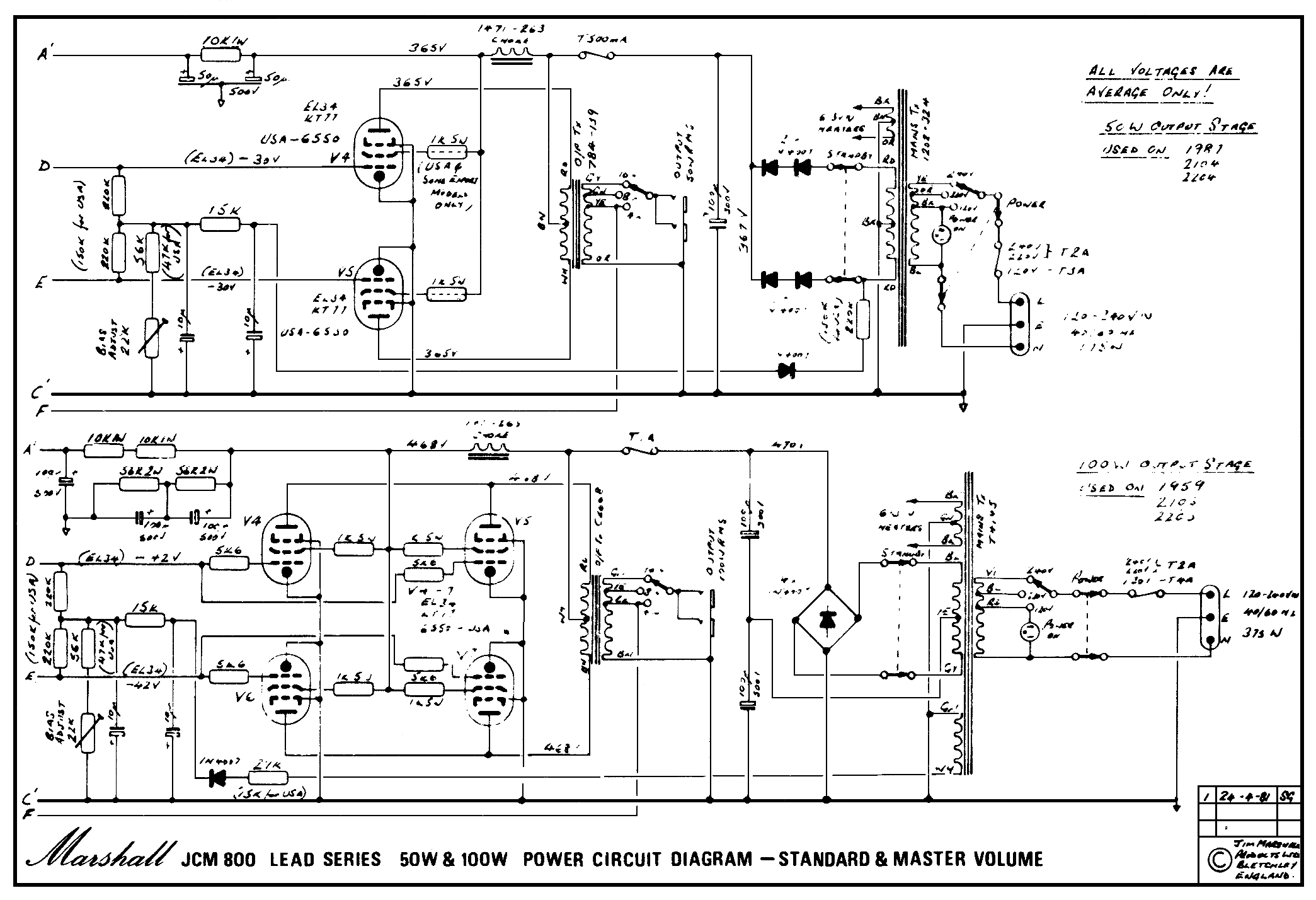
Sure, its a marshall style circuit working at 580 before rectification, quad el34 and a gz34 rectifier as standard, what i,m looking to do is have a option between the both, i understand the basic circuit but getting into the maths blows my brain, please bear in mind although i,m a good sparky(english slangColossal wrote:Do you mean a recommended capacitance value or a recommendation for a particular brand of cap? For a reservoir cap just after a diode rectifier, the value could be low to high depending on the circuit and the degree of filtering (Hz cutoff) you require, if you will be using a choke, where you will be taking your plate voltage from, etc. The voltage requirement is important depending on the operating voltages. So if you have something, say a single ended amp, operating at maybe 275-300V on the power tube, then a 450V cap should suffice. I personally like a bit of added security however so it very much depends on the application. Can you clarify your question a bit more?jestaudio wrote:Can anyone suggest the apprpriate rating for a smoothing cap on a diode rectifier circuit, i was thinking around 450 v olts but not really sure what uf i can get away with
Cheers
) this is only my third build so i,m still learning as i go along 
By '580' do you mean the HT winding is 580-0 VAC (i.e.: without a centre tap)? or 290-0-290VAC or 580-0-580VAC (centre tapped)?jestaudio wrote: its a marshall style circuit working at 580 before rectification